


硅橡胶是相对分子质量高的线型聚硅氧烷,具有柔软性好、耐热性突出等优异性能;还具有较低的表面张力、较小的介电常数和较低的玻璃化转变温度,广泛用于航空航天、电子电器、轻工纺织、建筑等领域[1,2]。其中,双组分的室温硫化液体硅橡胶由于固化条件温和、固化产物性能优异,是目前航空航天领域热防护涂料较为常用的树脂基体。热防护涂料的A组分通常以室温硫化液体硅橡胶为基体,添加各种补强填料、耐热填料制备而成;B组分则包括多官能度的硅烷或硅氧烷,以及有机锡催化剂。热防护涂料在制备和使用过程中需加入汽油、二甲苯等有机溶剂作为稀释剂,这些有机溶剂的大量使用,不仅破坏环境、危害人类健康,还是对能源资源的巨大浪费。随着人们环保意识的增强,以无污染、低污染的水性涂料[3]代替原有的溶剂型涂料成为趋势。能够用水分散硅橡胶乳液实现硅橡胶热防护涂料的水性化至关重要。但硅橡胶具有特殊的分子结构,表面能极低,容易聚集和团聚,很难得到稳定的乳液。通过添加两亲性的表面活性剂,降低油水界面的张力,再加上Marangoni效应的自修复作用,可以实现硅橡胶乳液的动力学稳定[4]。
传统的机械乳化法,采用均质机、胶体磨等设备把硅橡胶打碎成小油滴分布在水相里,不仅需要很高的能量输入,而且制得的硅橡胶乳液稳定性差,特别是热防护涂料所需的硅橡胶相对分子质量高、黏度大,机械乳化更为困难。转相乳化法利用表面活性剂自发曲率的改变诱发相转变,只需施加少量的能量即可获得稳定的乳液,在乳液制备领域有着更为广泛的应用[5,6,7,8,9]。按照诱导相转变的因素的不同,转相乳化法可分为乳液转相点法(EIP)和相转变温度法(PIT)2种[10]。其中,EIP法通过改变水相的体积分数获得曲率半径的自发转变。将水连续加入与乳化剂混合均匀的油相中,最初在连续的油相中形成水滴,随着水相体积分数的增加,乳化剂的自发曲率发生改变,乳液转变为O/W结构,诱导相转变的临界体积比称为乳液转相点[11]。
目前,关于线型聚硅氧烷转相乳化的研究报道集中于容易实现乳化的低黏度线型聚硅氧烷[12,13,14](即硅油),得到的硅油乳液多用于纺织和纸张涂布,不能满足热防护涂层的要求;国内尚未有关于通过乳液转相点法开展适用于热防护需求的硅橡胶的转相乳化工作的报道。
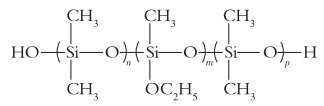
乳液转相点法中影响乳液性能的因素有很多[15,16,17,18],本实验以高黏度的嵌段甲基硅橡胶(结构见式1)为油相物质,通过对乳化剂类型进行选择,对乳化剂复配比例及添加量进行调整,制备了稳定的硅橡胶纳米乳液,并对影响乳液稳定性的因素进行了讨论。同时,通过测定转相过程中乳液的电导率,对乳液转相点法的相转变机理进行了分析。由于聚甲基三乙氧基硅氧烷链段中乙氧基的存在,嵌段甲基硅橡胶经硫化后得到的弹性体机械强度和粘接力均优于纯甲基硅橡胶,用作热防护涂料的基体时,不再需要添加补强填料和硅烷类固化剂。在有机锡化合物的催化作用下对硅橡胶乳液进行固化,并与溶剂型硅橡胶弹性体的性能指标进行对比。
1 实验部分
1.1 原料与仪器
室温硫化嵌段甲基硅橡胶(QD-231):黏度3 000~5 000 mPa·s,工业级,北京四环安通商贸有限公司;聚氧乙烯月桂醚(Brij35)、曲拉通X-100、司班80、吐温60、十二烷基磺酸钠:化学纯,国药集团化学试剂有限公司;十二烷基苯磺酸钠:分析纯,国药集团化学试剂有限公司;二月桂酸二丁基锡:化学纯,天津市化学试剂一厂;去离子水:自制。
SWFS-400型高速搅拌机:上海索维机电设备有限公司;Z326型高速冷冻型离心机:德国Hermle Labortechnik GmbH公司;ALV/DLS/SLS-5022F型激光光散射仪:德国ALV/Laser VertriebsgesellschaftmbH公司;DDSJ-308A型电导率仪:上海仪电科学仪器股份有限公司;CMT6104型万能试验机:美特斯工业系统(中国)有限公司;LX-A型邵氏硬度计:温州山度仪器有限公司。
1.2 乳化工艺
通过乳液转相点法对嵌段甲基硅橡胶进行乳化。依次向1 L烧杯中加入100 g QD-231和一定量的乳化剂,转速200 r/min,搅拌10 min,使其混合均匀;向上述混合物中缓慢加入30 g水,转速500 r/min,搅拌20 min;提高转速至10 000 r/min,迅速加入剩余的110 g水,高速搅拌2 min;降低转速至200 r/min,搅拌30 min,使乳液稳定。
1.3 测试方法
静置稳定性:将所得乳液在室温下静置,观察并记录乳液状态。
离心稳定性:将所得乳液以3 000 r/min的转速离心测试30 min,每隔5 min观察并记录乳液状态,测试温度25 ℃。
动态光散射:通过激光光散射仪测量乳液的流体力学半径,测试温度25 ℃,分散介质为水。
电导率:通过电导率仪测试转相过程中乳液的电导率,温度自动补偿为25 ℃。
拉伸应力应变性能:按GB/T 528—2009测定硅橡胶弹性体的拉伸强度和拉断伸长率。
邵氏硬度:按GB/T 531.1—2008测定硅橡胶弹性体的邵A硬度。
2 结果与讨论
2.1 乳化剂的种类
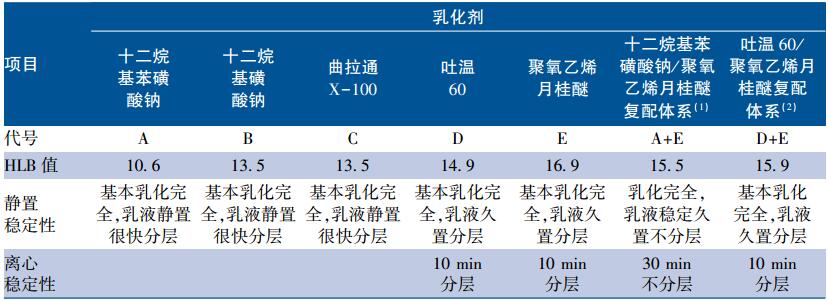
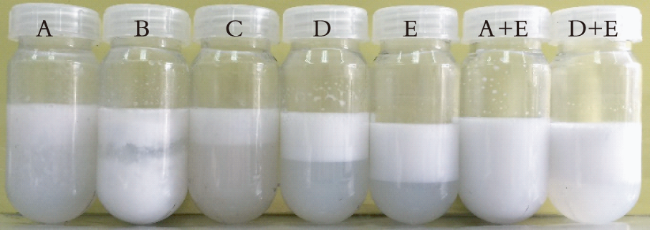
嵌段甲基硅橡胶作为被乳化物质,以A、B和C为乳化剂,乳液稳定性很差,静置很快分层,其中,以B为乳化剂时,还会产生明显的白色沉淀类物质;以D、E及D+E为乳化剂,乳液稳定性虽有改善,但久置依旧分层,且3 000 r/min离心10 min即出现分相;以A+E为乳化剂,乳液久置不分层,室温静置6个月,乳液状态不发生明显变化,且3 000 r/min离心30 min也未出现分相现象,乳液稳定性好。
由上述结果可知,使用单一乳化剂时,非离子型乳化剂的乳化效果好于阴离子型乳化剂;非离子型乳化剂的HLB值越高,亲水性越强,硅橡胶液滴在水相中的分散性越好,乳液的稳定性越好。使用复合乳化剂时,乳化效果比使用单一乳化剂有提高;HLB值略低的复配体系的乳化效果更好,说明乳化剂复配使用时,其种类及化学结构对乳化效果的影响大于HLB值的影响。
乳化剂在硅橡胶和水的油水界面发生吸附,乳化剂分子定向、紧密的排列,其亲水基团(极性部分)伸向水相,亲油基团(非极性部分)伸向油相。在油水界面的油相一侧,乳化剂的排布使得部分或全部的油水界面转变为油-亲油基团界面,同样,水相一侧的界面变为水-亲水基团界面,极大地减小了乳液的界面张力。乳化剂A的极性部分为磺酸基,带有一定的电负性。乳化剂E的极性部分是聚氧乙烯链段,在乳液中会与水中的氢原子结合,带有一定的正电性;2种乳化剂单独使用时,由于静电斥力的作用,在油水界面不能紧密排列,形成的乳化剂膜层不致密,很容易破乳,导致乳液分层;而A+E复配使用时,2种乳化剂交替分布,极大地减弱了各自的静电斥力,复合乳化剂在油水界面紧密排布,形成致密而稳定的膜层。尽管复合乳化剂的HLB值有所下降,亲水性有所减弱,仍然可以使乳液保持稳定。
2.2 乳化剂的复配比例
将乳化剂A和E以不同物质的量比进行复配,得到HLB值不同的复合乳化剂,采用乳液转相点法对嵌段甲基硅橡胶进行乳化,乳化剂的复配比例、HLB值对乳液稳定性的影响见表2,其中,乳化剂的添加量均为10%。
Table 2 Effect of surfactants ratio and HLB value on emulsion stability |
 |
从表2可知,阴离子乳化剂十二烷基苯磺酸钠与非离子乳化剂聚氧乙烯月桂醚复配使用时,随着十二烷基苯磺酸钠用量的增加,复配乳化剂的HLB值逐渐减小,乳液从稳定性先升高后下降。其中,在2种乳化剂物质的量比为1∶1时,乳液稳定性最好,室温静置6个月乳液状态不发生明显变化。
当2种乳化剂按物质的量比1∶1复配时,在油水界面交替分布,静电斥力最小,乳化剂膜层致密,强度最高,乳液最稳定。当两者以其他比例复配时,在油水界面不能交替排布,由于静电斥力的作用,乳化剂膜层不够致密,强度不高,很容易破乳,导致乳液分层。
2.3 乳化剂的添加量
将十二烷基苯磺酸钠和聚氧乙烯月桂醚按物质的量比为1∶1复配,采用乳液转相点法对嵌段甲基硅橡胶进行乳化,乳化剂的添加量对乳液稳定性的影响如表3所示。
Table 3 Effect of surfactants concentration on emulsion stability |
 |
从表3可知,复合乳化剂添加量从3%增加到10%,乳液稳定性不断提高。乳化剂添加量大于10%后,乳液均能久置不分层,室温静置6个月,乳液状态不发生明显变化,3 000 r/min离心30 min仍保持稳定。
乳化剂添加量低时,油水界面上吸附的乳化剂分子比较少,界面强度较差,乳液稳定性差;随着复合乳化剂用量的提高,乳化剂在油水界面的吸附量逐渐增多,形成的膜层的强度和完整性不断提高,硅橡胶液滴相互碰撞时受到的阻力增大,不易聚集,稳定性提高;当乳化剂在油水界面形成致密完整的膜层后,再加大乳化剂添加量,乳化剂不再在油水界面吸附,而是倾向于自身形成胶束,对硅橡胶乳液而言,其降低界面张力、增加界面强度的作用变得不再明显。
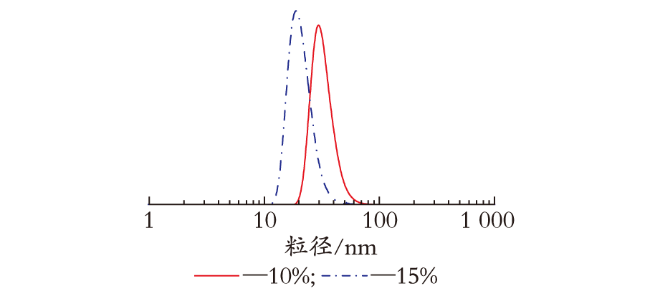
乳化剂添加量分别为10%和15%时,通过激光光散射法测得的硅橡胶乳液的流体力学半径见图2。乳化剂用量为10%时,乳液粒径为57 nm左右;乳化剂用量增加到15%时,乳液粒径进一步减小到35 nm。
2.4 相转变过程
将十二烷基苯磺酸钠和聚氧乙烯月桂醚按物质的量比为1∶1复配,复配乳化剂HLB值15.5,添加量为10%,通过乳液转相点法对嵌段甲基硅橡胶进行乳化,可制得稳定的纳米聚硅氧烷乳液。对相转变过程中乳液的电导率进行测试,电导率随水添加量的变化如图3所示。
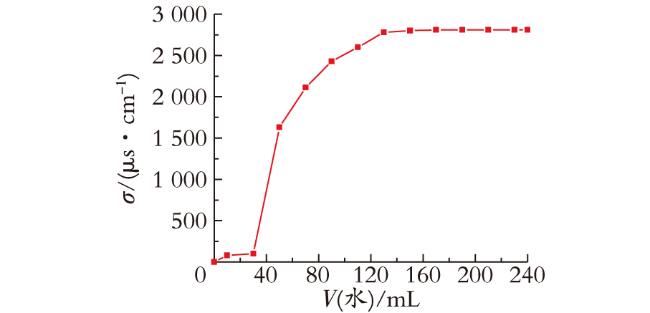
从图3可知,复合乳化剂和嵌段甲基硅橡胶的混合液体电导率为0;随着水添加量的增加,乳液的电导率增大,导电性增强。水添加量小于30 mL时,电导率增加缓慢,不足100 μS/cm;超过30 mL后,电导率急剧升高到1 500 μS/cm以上;水量继续增加,电导率的增加速率逐渐降低;水添加量大于140 mL后,电导率稳定在2 800 μS/cm左右。
对乳液转相点法所涉及的相转变机理进行分析,图4是乳化过程中硅橡胶液滴的形成示意图。
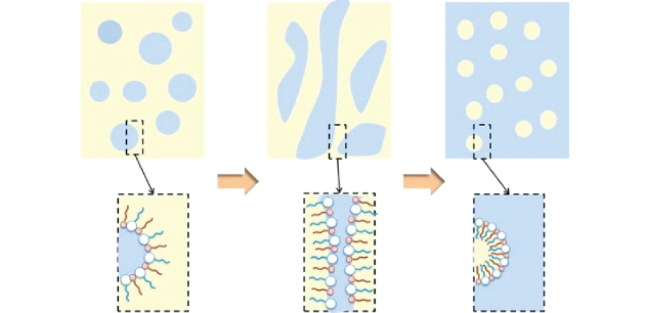
在嵌段甲基硅橡胶与复配乳化剂混合均匀后,缓慢加入少量水,乳化剂曲率为朝向油相的凹形,形成油包水结构,即油相为连续相,水相为分散相;随着水添加量的增加,乳液的平衡向能量降低的方向进行,水滴逐渐增大,乳化剂曲率逐渐变大,油水两相向扁平过渡层或油水双连续相转变;进一步增加水量,乳化剂曲率变为朝向水相的凹形,双连续相转变为水包油结构,即水相为连续相,油相为分散相。
2.5 乳液的固化
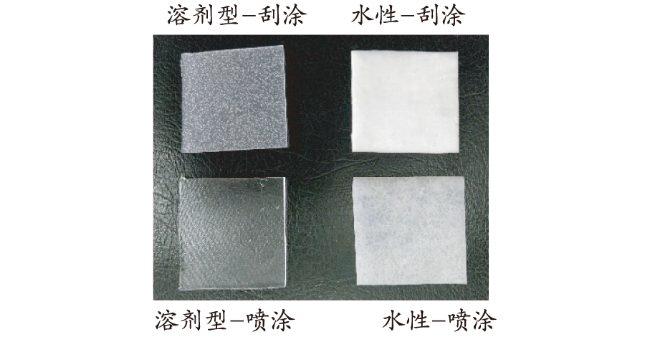
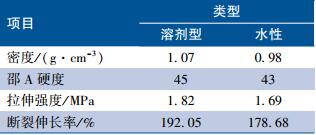
从图5可知,嵌段甲基硅橡胶乳液经二月桂酸二丁基锡催化所得的弹性体呈乳白色,而溶剂型嵌段甲基硅橡胶弹性体仍保持无色透明,分别与交联固化之前的颜色保持一致;水性硅橡胶弹性体的密度、邵A硬度、拉伸强度和断裂伸长率均略低于溶剂型硅橡胶弹性体,但差距并不显著。
嵌段甲基硅橡胶乳液交联固化形成弹性体的过程如图6所示。
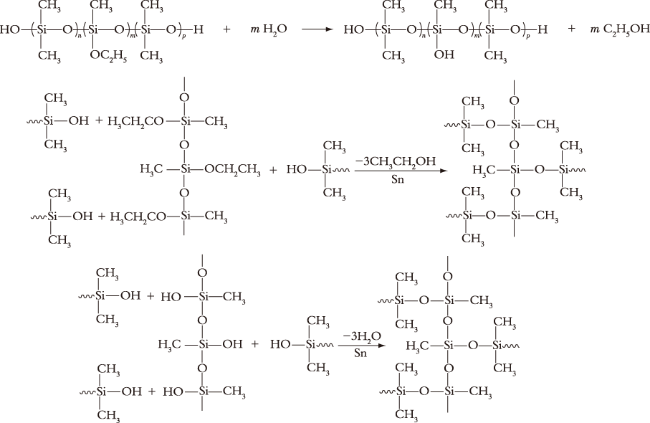


硅橡胶乳液固化过程中,随着水的挥发,硅橡胶液滴不断接近、接触进而挤压变形,硅橡胶分子之间不断发生缩合反应,形成交联的网状结构。与溶剂型硅橡胶弹性体不同的是,硅橡胶乳液中的乳化剂既不能参与交联固化,又不能随水全部挥发,水性硅橡胶弹性体中必然有小分子的乳化剂残留;另外,由于水的挥发速率慢于有机溶剂,在硅橡胶交联过程中不能及时挥发,水性硅橡胶弹性体的孔隙率要高于溶剂型硅橡胶弹性体,这些因素导致水性硅橡胶弹性体无论是密度、硬度,还是拉伸强度和断裂伸长率都略低于溶剂型硅橡胶弹性体。不过乳化剂在弹性体中的残留量很少,且水挥发速率和硅橡胶交联速率之间的平衡可以通过有机锡催化剂的添加量等进行调节,总体而言,水性硅橡胶弹性体的各项性能指标与溶剂型硅橡胶弹性体差距不大。因此,硅橡胶乳液作为水性热防护涂料的基体,通过与其他耐热功能填料的配合,有望替代溶剂型涂料发挥有效的热防护作用。
3 结 语
乳液转相点法能够实现室温硫化嵌段甲基硅橡胶的水性化,转相过程中,乳液体系从油包水结构经由油水双连续相变为稳定的水包油结构。非离子乳化剂与阴离子乳化剂复配使用时乳化效果更好,且乳化剂的化学结构和复配比例比HLB值对乳化效果的影响更大。与溶剂型硅橡胶弹性体相比,甲基嵌段硅橡胶乳液交联固化得到弹性体的硬度、拉伸强度等指标相近,未来可以作为水性热防护涂料的基体,实现对溶剂型涂料的替代。